
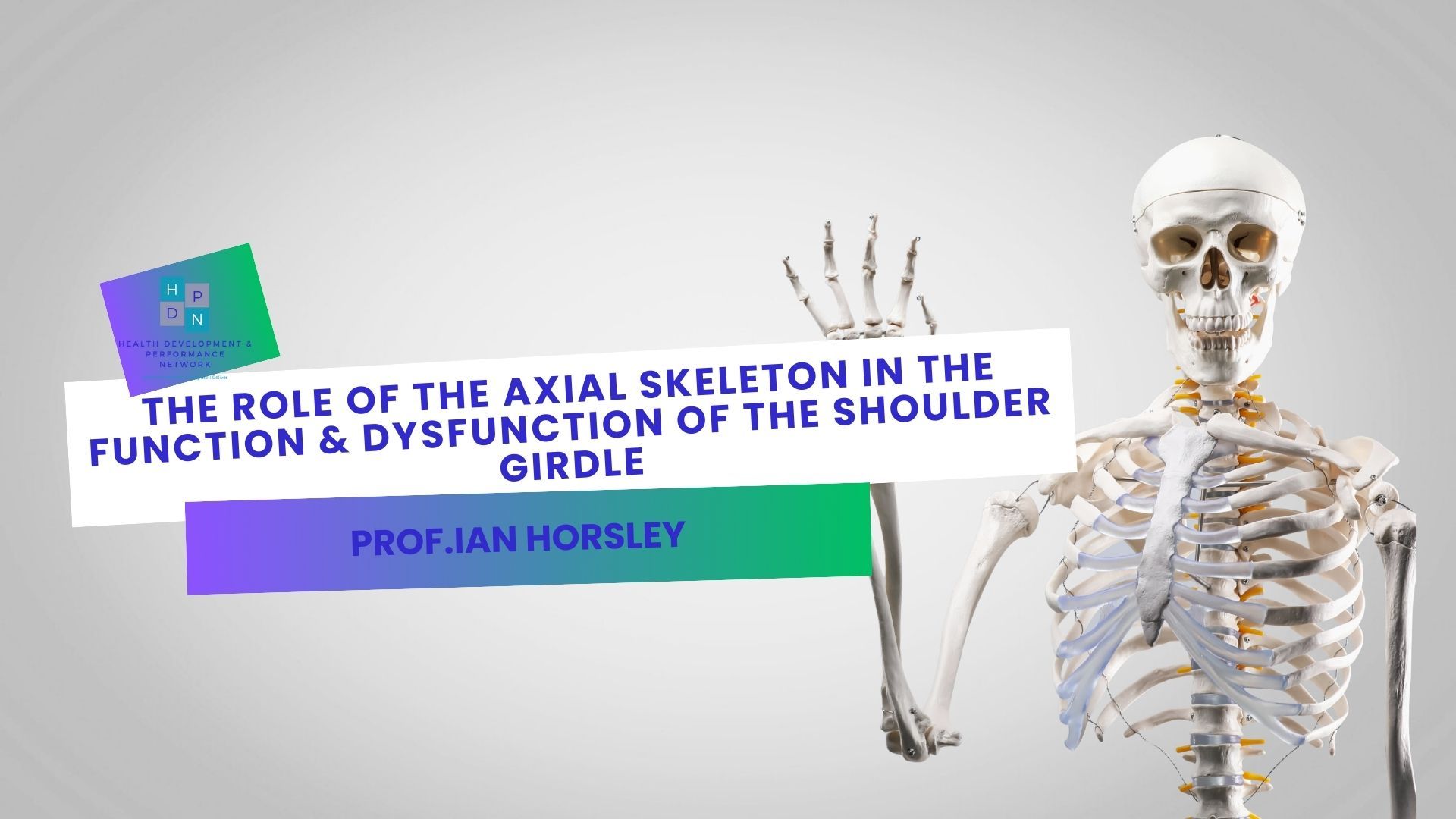
The Role of the Axial Skeleton in Shoulder Girdle Function and Dysfunction
7th May 2026
7–9pm BST
Prof.Ian Horsley
Shoulder pain and performance limitations are rarely isolated to the glenohumeral joint alone.
While traditional assessment often focuses on the clavicle, scapula and humerus, optimal shoulder function depends on the integration of the entire axial skeleton.
This webinar explores the critical influence of the cervical spine, thoracic spine, sternoclavicular joint and respiratory mechanics on shoulder girdle movement and load transfer. Drawing on the principle of regional interdependence, Prof. Horsley will demonstrate how dysfunction in one region can alter stress distribution across the system and contribute to persistent shoulder symptoms and suboptimal performance.
You will gain a deeper understanding of the arthrokinematics required for efficient shoulder motion and learn to identify common patterns of dysfunction that may be overlooked in routine clinical assessment. The session will connect biomechanics with practical clinical reasoning to enhance both rehabilitation outcomes and performance based decision making.
This webinar is designed for physiotherapists, sports therapists and coaches who want to move beyond local shoulder assessment and develop a more integrated, whole system approach to shoulder dysfunction.
Key learning outcomes include
Understanding how the axial skeleton influences shoulder mechanics
Recognising common dysfunctions in the cervical spine, thoracic spine and sternoclavicular joint that impact shoulder function
Integrating respiratory mechanics into shoulder assessment and rehabilitation
Applying regional interdependence principles to improve clinical reasoning and treatment planning
This interactive webinar will take 60-90mins with time for Q&A after.
Member discounts apply.
Members retain access to the recording for the life of their membership.
Non-members your purchase includes 14 day access to review online.